
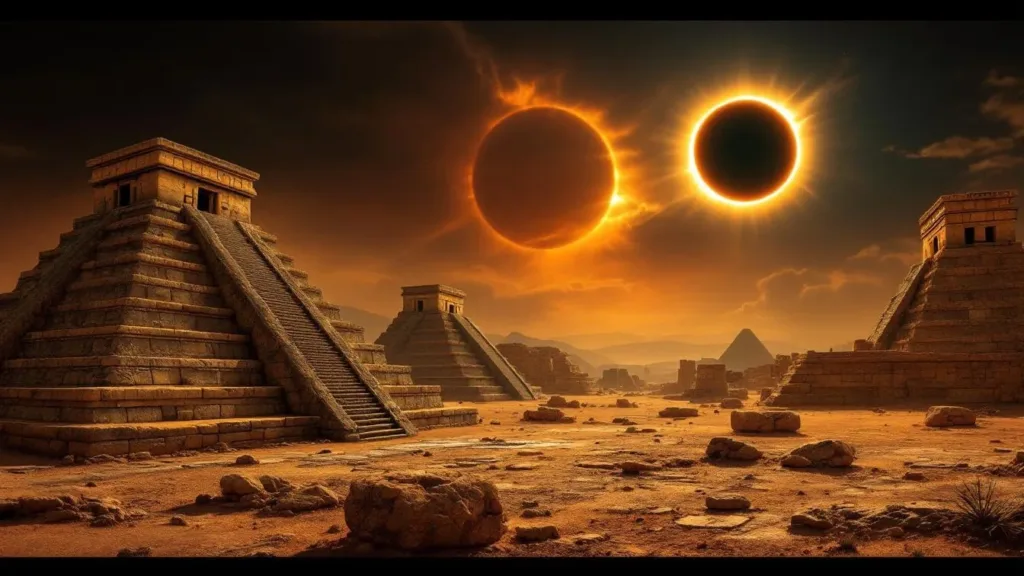
Throughout history, eclipses have stirred both awe and apprehension in human societies. Ancient cultures, devoid of modern scientific understanding, perceived these celestial events as messages from the divine, shaping their beliefs and actions. From the ominous predictions in Mesopotamia predicting the death of kings to the vivid tales of dragons devouring the sun in China, eclipses were a canvas for the imagination. These narratives not only provided explanations but also forged cultural identities. Even in today’s world, lingering myths caution pregnant women to stay indoors or dissuade individuals from making significant life choices during these phenomena. Such beliefs illustrate that while our understanding has evolved, the emotional resonance of eclipses continues to echo through time.
How Ancient Civilisations Interpreted Eclipses
In different corners of the globe, eclipses represented various meanings, often tied to the prevailing cultural context. In Mesopotamia, Babylonian astrologers viewed solar eclipses as foreboding events, prompting the appointment of temporary “substitute kings” to deflect divine wrath. Meanwhile, in China, the celestial dragon myth offered an imaginative explanation for eclipses, prompting loud noises to scare the beast away. It is fascinating how these interpretations reveal both the fears and hopes of societies striving to make sense of the universe.
Myths of Doom and Divine Battles
For many ancient cultures, eclipses were not merely astronomical events; they were profound spiritual occurrences. Hindu mythology tells of the demon Rahu, whose pursuit of the sun and moon results in their eclipse—reflecting a cosmic struggle that resonates with the eternal battle between light and darkness. Similarly, the Norse believed that the sun and moon were chased by wolves, with an eclipse signalling their capture. These interpretations underscore humankind’s deep-rooted inclination to connect cosmic phenomena with terrestrial events, often attributing significance to seemingly random occurrences.
Modern Superstitions and Cultural Reflections
Despite advancements in science, eclipse-related superstitions endure in various cultures. Among many, the belief persists that pregnant women should avoid exposure during eclipses to safeguard their unborn children. Such customs, rooted in ancient fears, highlight a lingering connection to the celestial events. Additionally, astrological interpretations consider eclipses as catalysts for transformation, signalling endings and new beginnings. Even today, some hold their breath when the sky darkens, revealing that the primal emotions tied to these events are deeply entrenched in our collective psyche.
Cultural Legacy and Historical Significance
The impact of eclipses on historical events is undeniable. Many rulers, fearing for their power, turned to art, literature, and rituals to cope with the uncertainty eclipses presented. As the sun disappeared, so did their sense of security. By embedding these celestial phenomena into their mythology, ancient civilisations created a narrative framework through which they could navigate the chaos of life. Today, as we look skyward during an eclipse, it serves as a reminder of our rich cultural heritage and the ever-present quest for meaning in the sublime.