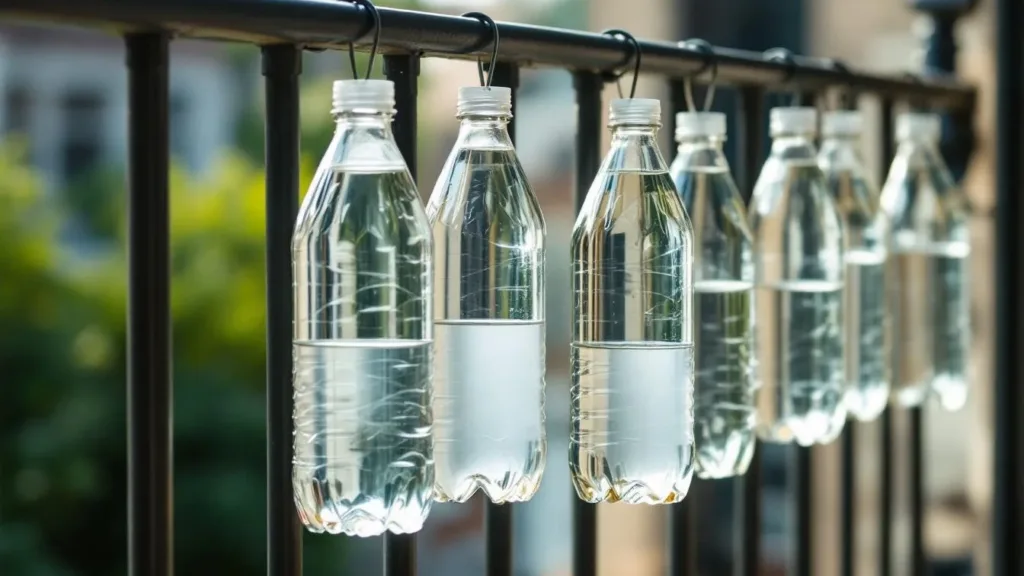
In urban environments, the quest for effective and eco-friendly pest control methods has led to a resurgence of an age-old household technique: hanging bottles filled with water and vinegar. This peculiar sight has become commonplace across balconies, as residents seek natural solutions to combat annoying insects without resorting to chemical sprays. Observers often note the shimmer of sunlight refracting through the bottles, casting playful patterns that captivate the eye. But the underlying question remains: does this DIY method truly deliver on its promises to deter pests?
The practice draws on two primary mechanisms: a dual approach combining visual disruption and chemical deterrence. Birds, particularly pigeons, depend heavily on sight when navigating for landing spots. The moving light patterns created by the water—acting like a shifting mirror—can disorient them, potentially encouraging them to avoid certain areas. Meanwhile, the acetic acid in vinegar releases pungent vapours that many insects, including flies and mosquitoes, are known to find repugnant.
How to Set Up Your DIY Pest Control
Creating your own insect-deterring bottles is a straightforward process. Firstly, fill plastic bottles about two-thirds full with water, adding a modest quantity of vinegar—usually one tablespoon to a quarter glass, depending on your space. It’s essential to create a few small holes in the bottle caps to allow the scent to escape. Lastly, securely attach string or wire around the neck of the bottle for easy hanging from balcony railings or doorways.
The Science Behind the Method
Experts explain that while the acetic acid in vinegar may repel certain pests, its effectiveness largely depends on environmental factors. For instance, sunlight angles, local insect species, and even climatic conditions can affect how well the bottles work. Additionally, while some studies indicate up to a 20% reduction in fly presence with these traps, they cannot replace a thorough sanitation regimen. More substantial infestations demand comprehensive pest management rather than relying solely on these containers.
Regional Variations and Alternatives
Cultural variations also play a role in how residents approach pest control. In various regions, some have experimented with adding unconventional ingredients like turmeric or chili powder to the water for enhanced deterrent properties. Others have opted for different strategies, such as hanging bags of coffee grounds or citrus peels, which can emit scents unpleasant to specific insects.
Practical Considerations
Safety is a paramount concern for many households, especially those with children or pets. Following best practices—like using smaller bottles and positioning them securely away from direct pedestrian pathways—can mitigate potential risks. Regular maintenance such as refilling the bottles every ten days ensures effectiveness while keeping outdoor spaces clean.
Ultimately, while these hanging water and vinegar bottles can be a delightful addition to balconies, they serve best as part of a broader pest management strategy. Combining such DIY techniques with proper hygiene practices offers the most reliable approach to maintaining insect-free living spaces.