
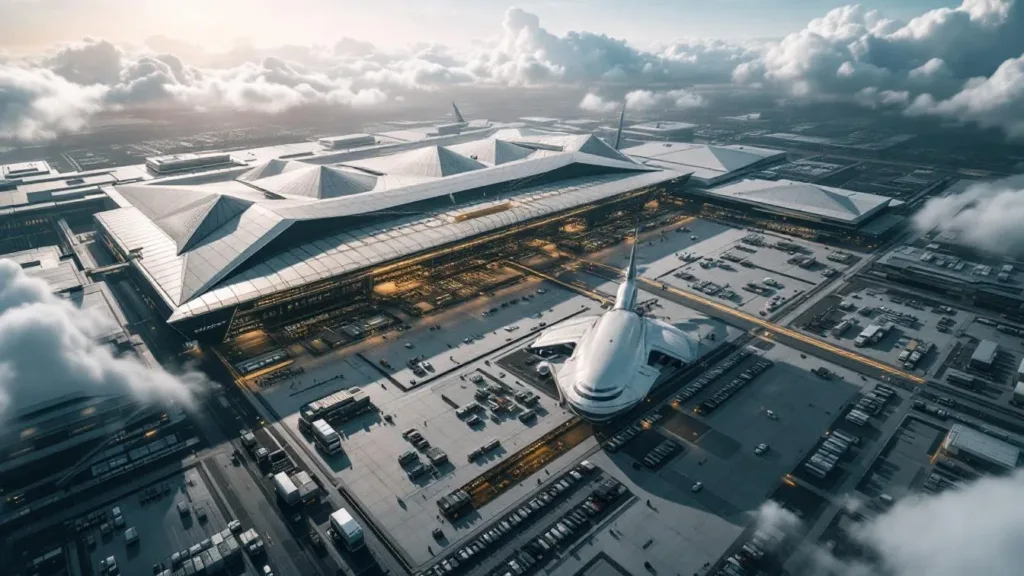
Across the globe, aircraft factories stand out not only for their purpose but also for their sheer size. These manufacturing behemoths, like the Boeing Everett Factory, challenge our understanding of traditional industrial buildings. With vast interiors and advanced technology, they are at the forefront of the aviation sector, producing commercial and military aircraft that shape the skies. In a world driven by air travel, understanding the scale and significance of these structures offers a glimpse into the intricate workings of the aerospace industry.
The Boeing Everett Facility in Washington State is the largest building in the world by volume, covering 98.3 acres and containing 472 million cubic feet of space. Opened in 1967, it has since been a hub for producing the iconic 747, 767, 777, and 787 Dreamliner. The complexity of operations within these factories is remarkable; they resemble small cities, equipped with their own infrastructure to support thousands of workers engaged in airplane production.
Understanding the Scale of Aircraft Factories
The unique nature of aircraft manufacturing requires facilities that can accommodate the large-scale production of airplanes. These aircraft factories not only produce individual aircraft but also manage intricate supply chains and various industrial processes. The size of manufacturing buildings used in this sector is often comparable to other large structures, but the specific requirements of aviation manufacturing make their design distinct.
Key Features of Aircraft Manufacturing Facilities
Aircraft factories incorporate several features that make them essential to modern aviation:
- Large usable space: These factories need extensive floor areas to assemble and test airplanes. The massive size allows for multiple aircraft to be built simultaneously.
- Advanced technology: Cutting-edge manufacturing processes are employed, including robotics and automation, enhancing production efficiency.
- Integrated operations: Facilities often house everything from design to assembly lines and testing zones, streamlining operations and reducing transit times.
The Global Impact of Aircraft Factories
The aerospace industry, driven by these colossal manufacturing operations, plays a pivotal role in the global economy. Not only do they support millions of jobs directly, but they also impact associated sectors, such as tourism and logistics. The efficiency enhancements realized through modern aircraft manufacturing techniques have led to safer and more economical travel options.
As of 2024, major manufacturers like Airbus, valued at $114.97 billion, and Boeing, at $113.82 billion, dominate the market, reflecting a trend toward consolidation in the industry. These giants face increasing demands to innovate and enhance their manufacturing processes further. The continual rise in air traffic underscores the necessity for expanding production capacities, as anticipated demand estimates suggest a requirement for nearly 40,000 new commercial aircraft over the next two decades.
Environmental Considerations in Aircraft Manufacturing
As the industry grows, there is a concerted effort to pursue sustainable practices. Manufacturers are increasingly adopting environmentally friendly materials and technologies. Recent advancements have led to a significant reduction in emissions per aircraft, contributing to a more sustainable aviation future. The focus on eco-friendly practices aligns with growing global concerns about climate change and environmental impact.
The landscape of aircraft manufacturing is evolving rapidly, with advancements in technology, sustainability efforts, and a persistent demand for new aircraft shaping its future. As these large buildings continue to push the boundaries of what is possible in manufacturing, they not only redefine industrial capabilities but also play a crucial role in enhancing our interconnected world.