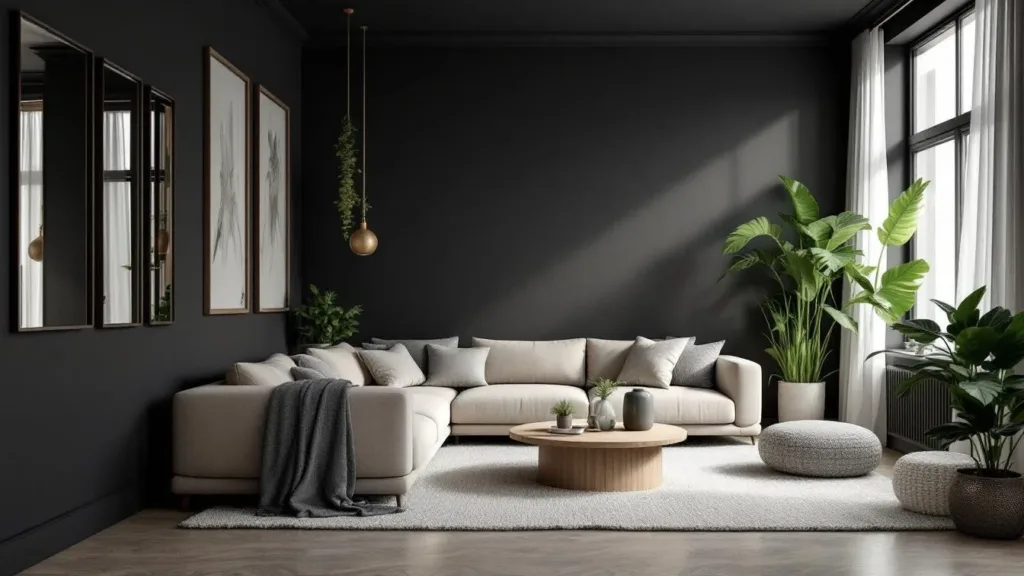
The perception of space in interior design often leads to conflict between conventional wisdom and modern understanding. For years, many have believed that light-coloured walls are the only way to make small rooms feel more expansive. Yet, a growing number of designers are challenging this idea, asserting that dark paint can actually enhance the sense of space in these compact areas. This notion hinges on principles of color psychology and visual depth, which reveal how our eyes interpret different shades and lighting effects. Dark hues can almost create a tunnel effect, drawing the viewer’s gaze further into the room rather than confining it to the walls. As a result, this debated paint trend is gradually gaining acceptance in the interior design community.
Many assume that dark colours absorb light, causing spaces to feel smaller and more enclosed. However, psychological studies have repeatedly demonstrated that dark objects recede, while lighter ones advance. This means that, paradoxically, darker shades can push the walls back in the viewer’s mind, offering an illusion of depth and enhancing space enhancement. This insight is pivotal for anyone looking to transform a cramped bathroom, study, or living area into a more inviting environment.
Why Dark Paint Works in Small Spaces
The transformation that occurs when dark paint is applied to the walls lies in its unique ability to manipulate perception. For example, using a moody navy or deep emerald green can create a cocoon-like environment, giving the space a sense of intimacy while simultaneously pushing the boundaries of the room outward. This effect is particularly useful in areas where light is limited, allowing for a richer and more layered visual experience.
Additionally, the power of lighting effects shouldn’t be underestimated. Strategic lighting choices—like ambient and accent lights—can complement dark walls, enhancing their transformative qualities. A well-lit dark room can feel airy and spacious, while poorly lit, brightly coloured walls may appear even more claustrophobic if the light is insufficient.
Breaking the Myths Surrounding Dark Paint
Despite these compelling arguments, many remain sceptical. The influence of media, particularly popular home improvement shows, has reinforced the myth that dark shades are a designer’s faux pas in small spaces. However, as more designers incorporate dark tones into their projects, this narrative is evolving. The shift aligns with contemporary design trends that favour bold choices and individual expression over outdated guidelines.
Ultimately, the decision to use dark paint should be informed by the specific characteristics of the room, including available light, intended use, and personal taste. Embracing dark colours can be a liberating move, allowing homeowners to express their style while redefining space perception in innovative ways.