
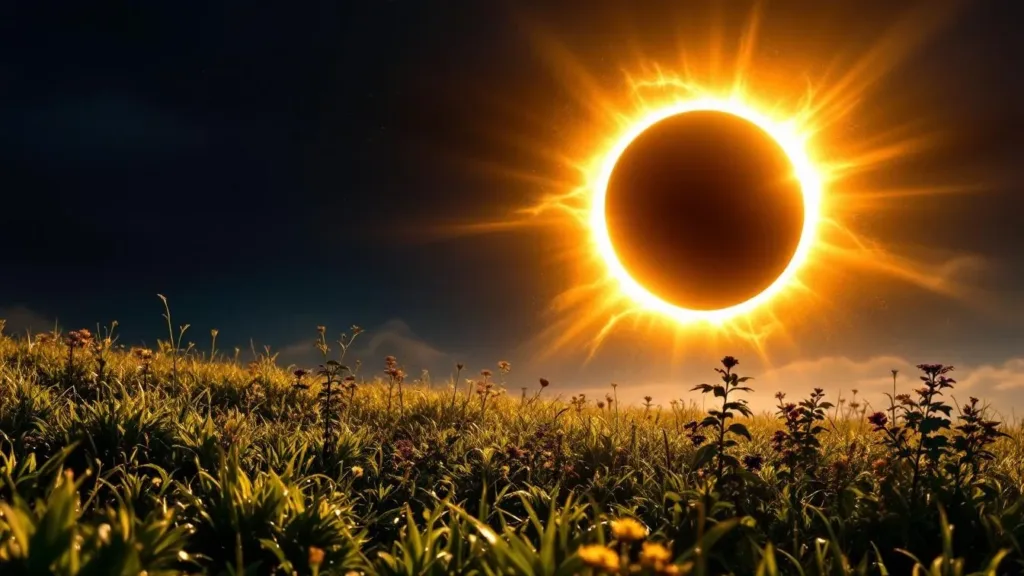
During a total solar eclipse, the world experiences a remarkable transformation, with one of the most noticeable effects being the sudden drop in temperature. As the Moon passes between the Sun and Earth, casting its shadow, the usual warmth of direct sunlight diminishes, sometimes causing temperatures to plunge by as much as 10 degrees Celsius within minutes. This is not just an optical phenomenon; the cooling effect extends to the atmosphere, influencing local weather conditions. The duration of totality plays a crucial role in determining how much the temperature will drop: longer durations lead to more significant changes.
In 2017, during the Great American Eclipse, observers reported dramatic temperature decreases across various states. For instance, cities like Salem, Oregon, which lay in the path of totality, recorded temperature dips of roughly 6 degrees Celsius as the Moon’s shadow enveloped them. Even areas experiencing a partial eclipse felt the chill, though to a lesser extent. These phenomena serve as a testament to the intricate dance of celestial bodies and their immediate effects on Earth’s climate. Understanding this interplay not only enhances our appreciation for such astronomical events but also provides valuable insights into atmospheric science.
How Does the Shadow Affect Temperature During an Eclipse?
The mechanics behind the temperature drop during a solar eclipse are closely tied to the dynamics of solar radiation. When the Moon obscures the Sun, the atmosphere experiences a reduction in direct sunlight, causing the ground to lose heat more rapidly than it gains it. This process demonstrates the principle of thermal conduction, where the ground cools, and in turn, cool air sinks, influencing nearby temperatures.
The various regions affected by the eclipse—particularly those within the umbra, or darkest area of the shadow—experience more pronounced temperature shifts than those in the penumbra, where the eclipse is partial. Observations from previous eclipses suggest that the air temperature can decrease as much as 3 to 8 degrees Celsius in mere moments, showing the immediate impact of this cosmic alignment.
The Role of Seasonal Variability
Interestingly, the season during which a solar eclipse occurs also influences the extent of the temperature drop. In summer, for instance, the ground is generally warmer, and thus, the sudden loss of sunlight can lead to a more significant contrast, resulting in sharper temperature declines. Conversely, eclipses occurring in colder months might not produce as dramatic an effect, though the chill is still noticeable.
The interplay of these factors is significant for scientists studying climate impact. By analyzing temperature shifts during eclipses, researchers can glean insights into broader atmospheric processes, furthering their understanding of climate dynamics.
Impact on Wildlife and Environment
Not just human observers, but flora and fauna react noticeably during a total solar eclipse. Wildlife often exhibits altered behaviours; birds may stop singing, and animals that are typically active during the day might retreat to their shelters, mistaking the darkness for night. This behavioural shift highlights the profound connection between natural rhythms and environmental cues, further emphasizing the eclipse’s influence on Earth’s biosphere.
Moreover, the reduced sunlight during an eclipse can influence local weather systems temporarily, potentially affecting cloud cover and humidity levels. As researchers continue to explore these connections, it is evident that each eclipse presents a unique opportunity to study the subtle yet profound relationships within our environment.
Observing Future Eclipses
Looking ahead, there are several total solar eclipses set to occur in the coming years, with 2024’s eclipse expected to cut across parts of North America. As preparations begin, understanding the temperature drop during these eclipses can prepare enthusiasts for the experience. Observers should be ready for the unexpected coolness and take note of any peculiar wildlife responses.
By embracing the scientific knowledge surrounding these celestial events, communities can enhance their appreciation for the wonders of the universe while engaging in responsible observation practices during such spectacular occurrences.